Last updated: October 2026 · ~10 min read
Moving to Porto and working for yourself? The paperwork is very doable once you know the order. This guide walks you through every step, from getting your NIF to sending your first invoice. It has separate paths for EU and non-EU citizens, Porto office tips, and the mistakes newcomers make most often.
Quick checklist
- Get your NIF (tax number)
- Sort your residency (CRUE for EU citizens; visa + AIMA for non-EU)
- Activate Chave Móvel Digital and open a bank account
- Open your activity at Finanças (“início de atividade”)
- Register with Social Security and get your NISS
- Buy work accident insurance
- Start invoicing with faturas-recibo
Not tax or legal advice. Rules change often, so confirm your situation with a certified accountant (contabilista certificado).
Step 1: Get your NIF
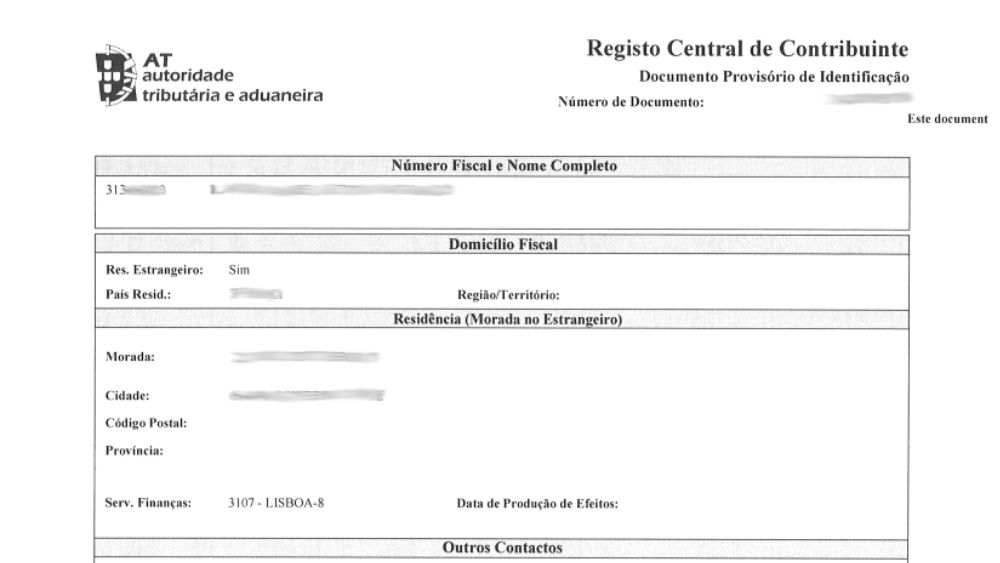
Your NIF (Número de Identificação Fiscal) is your Portuguese tax number. You need it for nearly everything: renting a flat, opening a bank account, signing a phone contract. At the supermarket you’ll be asked “contribuinte?”. Give your NIF so the purchase counts toward your IRS deductions.
How to get it
- In person at any Finanças office or Loja do Cidadão, with your passport or ID card.
- Remotely, before you arrive, through a lawyer or NIF service, usually for a fee.
- Non-EU non-residents traditionally need a fiscal representative. You can now often skip this by signing up for the tax authority’s electronic notifications instead.
Tip: once you have a Portuguese address, update it at Finanças straight away. Your tax residency and your official letters depend on it.
Step 2: Sort your residency
EU, EEA and Swiss citizens: get your CRUE
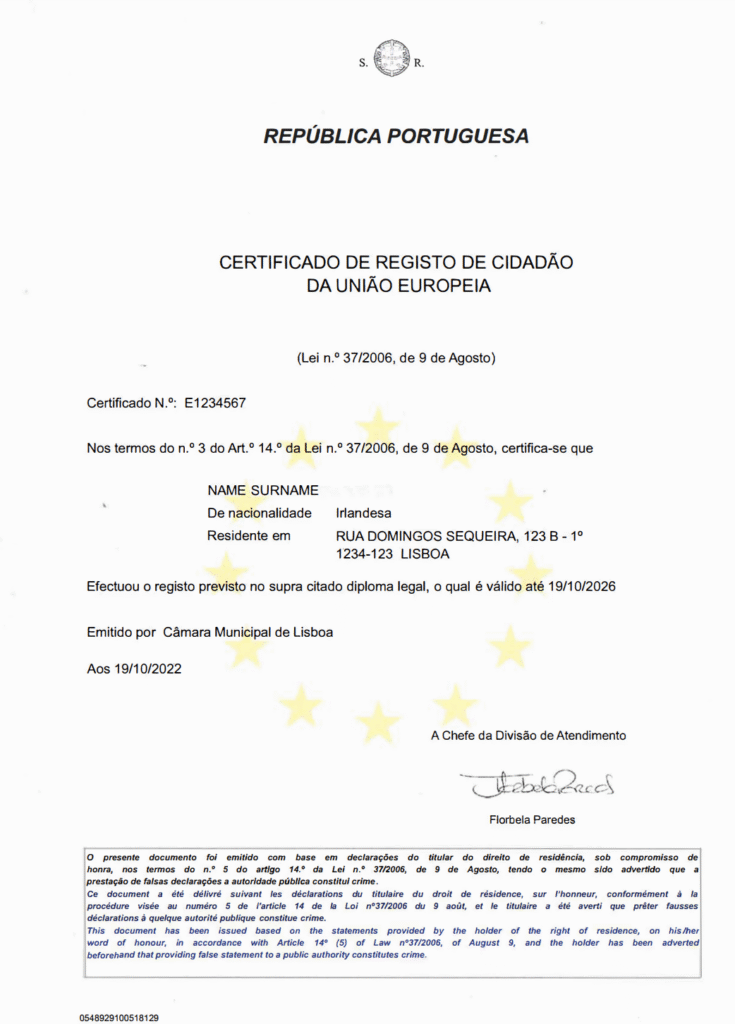
You don’t need a visa. If you stay longer than 3 months, register at your local Câmara Municipal to get your CRUE (Certificado de Registo de Cidadão da União Europeia). Bring your ID, NIF and proof of address. You’ll also be asked to show you’re working or self-employed, or have enough means to support yourself. More on the CRUE and the documents you need.
Non-EU citizens: choose the right visa
| Visa | Best for | Key requirement |
|---|---|---|
| D2 | Freelancers with Portuguese or EU clients, entrepreneurs | A business plan or service contracts |
| D8 | Remote workers and digital nomads with foreign clients | Income of at least 4x the Portuguese minimum wage |
| D7 | Passive income (pensions, rentals, investments) | Stable passive income; remote work possible |
How it works
- Apply at the Portuguese consulate in your home country.
- If approved, you get a residence visa valid for about 4 months, with an AIMA appointment date.
- At AIMA (the immigration agency that replaced SEF), you give your biometrics and receive your residence permit (título de residência).
Tip: AIMA appointments can take months. Keep a copy of your visa and appointment proof, since they let you live and work legally while you wait.
Step 3: Chave Móvel Digital and a bank account
Chave Móvel Digital (CMD) is your digital ID for Portuguese public services. With it you can log in to Portal das Finanças, Segurança Social Direta and the SNS app without separate passwords. Activate it at a Loja do Cidadão or Espaço Cidadão with your ID and NIF. It takes about 10 minutes and saves you hours later.
Bank account. You need a Portuguese IBAN for tax and Social Security payments, and some visas ask for one. With your NIF and passport, you can open an account in person in under an hour.
- Traditional banks: Millennium BCP, Novo Banco, Caixa Geral de Depósitos, Santander
- Online options: ActivoBank (part of Millennium), Revolut (now offers Portuguese IBANs)
- Watch out: a foreign IBAN (N26, Wise) works for daily life but may not be accepted for direct debits by Segurança Social.
Step 4: Open your activity at Finanças
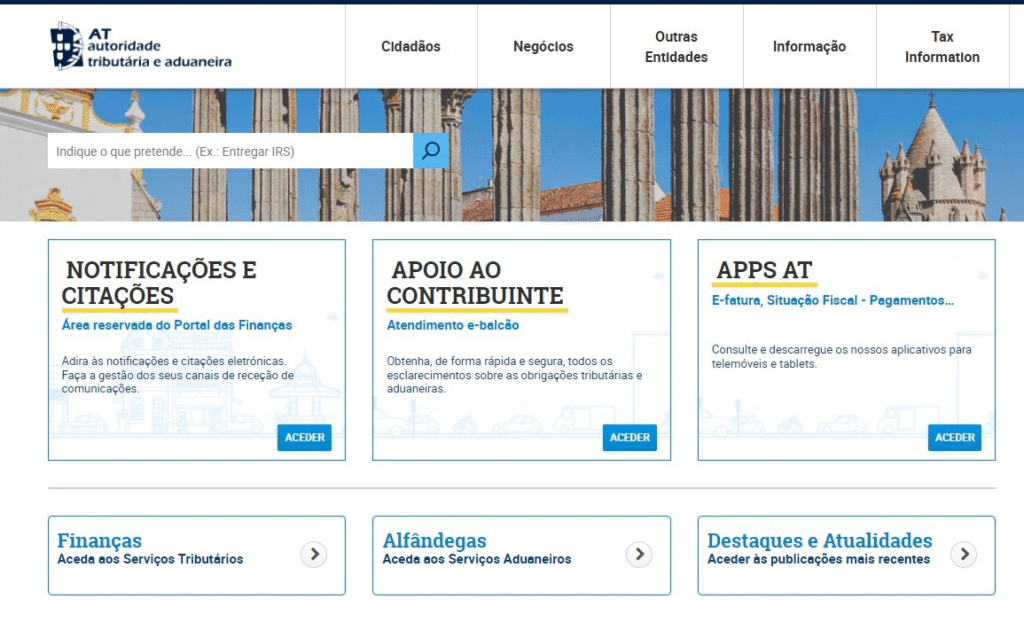
Registering as self-employed is called “início de atividade”. Do it online on Portal das Finanças (Serviços → Atividade → Declaração de Início de Atividade), or in person at any Finanças office.
You’ll be asked to choose:
- Activity code: most freelancers use a CIRS Art. 151 code (e.g. 1332 for IT consultants). If your profession isn’t listed, you use a CAE code.
- Expected annual income: this decides your VAT and accounting regime.
- Accounting regime: the simplified regime (regime simplificado) applies automatically if you earn under €200,000 a year. You don’t need organised accounting.
- VAT (IVA): you’re exempt under Art. 53 if you expect to bill less than €15,000 a year. Above that, you charge VAT.
Tip: the code and regime you choose affect your taxes. Spend 30 minutes with an accountant before you submit.
Step 5: Register with Social Security
Finanças tells Segurança Social when you open activity, but you still need a NISS (Social Security number). If you don’t have one, request it online (Segurança Social Direta) or at a Segurança Social office in Porto.
How contributions work
- First 12 months: exempt. Your first year of activity is free of contributions.
- Rate: 21.4% of your relevant income. For services, relevant income is 70% of what you invoiced, so you pay about 15% of your gross.
- Quarterly declaration: in January, April, July and October you declare what you earned in the previous quarter. This sets your monthly payment.
- Adjusting: you can raise or lower your contribution base by up to 25%, in 5% steps.
- Minimum: if you earned nothing in a quarter, you pay a minimum of €20 a month.
Example: you invoice €3,000 in a quarter (€1,000/month). Relevant income is €700/month, so you pay about €150/month for the next three months.
Step 6: Insurance and invoicing
Work accident insurance (seguro de acidentes de trabalho). This is mandatory for self-employed workers, and many newcomers miss it. Most Portuguese insurers sell it, typically for a modest annual premium. Have it in place before your first invoice.
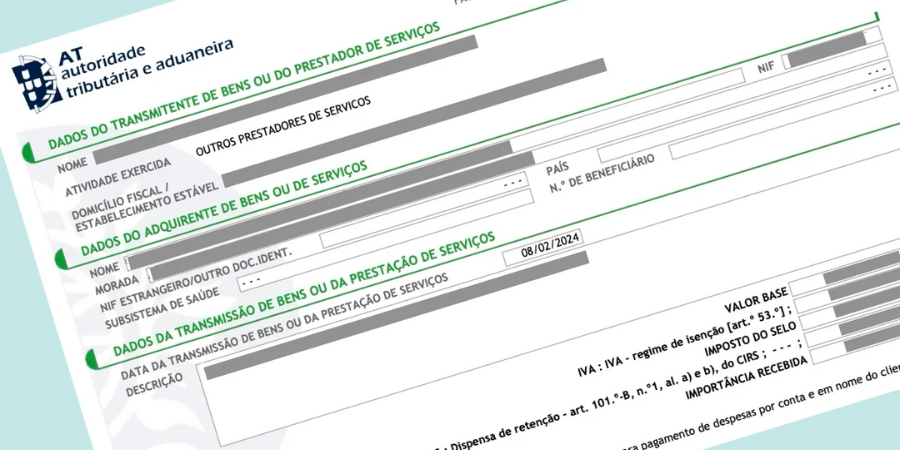
Invoicing with “recibos verdes”. “Recibos verdes” (green receipts) is the old name; today you issue faturas-recibo for free on Portal das Finanças. Issue one for every payment you receive, within 5 working days.
- Withholding tax: when you invoice a Portuguese company, it usually withholds 23% IRS on your behalf. This is an advance on your annual tax, not an extra cost.
- Exemption: if you expect to earn under €15,000 a year, you can opt out of withholding.
- Foreign clients: no withholding applies.
Taxes: what to file and when
IRS (income tax). You file once a year, between 1 April and 30 June, for the previous calendar year. Under the simplified regime only 75% of your service income is taxed. In your first two years that share is reduced further (by 50% in year one and 25% in year two, if you qualify).
VAT (IVA). If you’re VAT-registered, file returns every quarter. Billing EU business clients? The reverse charge applies, so you don’t charge Portuguese VAT. You still have to file both the periodic return (declaração periódica) and the recapitulative statement (declaração recapitulativa).
Special regimes worth checking
- IFICI (“NHR 2.0”): replaced the old NHR, which closed to new applicants in 2024. It offers a 20% flat rate for qualifying high-skilled roles, research and startups. Eligibility is narrower than NHR.
- IRS Jovem: large IRS exemptions for workers aged 35 or under, for up to 10 years.
- Programa Regressar: a 50% income exemption for people who lived in Portugal before and are returning.

Porto tips from locals
- Loja do Cidadão: a one-stop shop for Finanças, Segurança Social and Chave Móvel Digital. Arrive before opening time, because tickets run out by mid-morning.
- Book ahead: most Finanças offices in Porto work by appointment. Book through the Portal das Finanças “Atendimento” page.
- Espaços Cidadão: these smaller service points in the parish councils (juntas de freguesia) often have shorter queues for CMD and simple requests.
- Language: staff usually speak some English, but bring printed documents and key phrases in Portuguese.
FAQ
Can I freelance on a D7 visa?
Yes. A D7 residence permit lets you open activity and invoice clients, but your visa application must rely on passive income.
Do I need an accountant?
Not legally, under the simplified regime. Most newcomers still use one for the first year, especially if they’re VAT-registered or have foreign clients.
How long does the whole process take?
For EU citizens, about 2–4 weeks. For non-EU citizens, it can take several months, mostly waiting for the visa and the AIMA appointment.
Do I get public healthcare?
Yes. As a legal resident you can register at your local health centre (centro de saúde) for a Número de Utente. Many freelancers add private insurance for faster access.

Official sources
- Portal das Finanças: NIF, activity, invoicing, IRS, VAT
- Segurança Social: NISS and contributions
- AIMA: visas and residence permits
- gov.pt: Chave Móvel Digital and public services