Thanks to its seaside location, there are many beaches around Porto. Although the North Atlantic water is not that pleasant to bath in, nothing beats the seaside sunset, beach walks on long wooden paths, surfing in the Atlantic Ocean waves or having a coffee/beer in your favorite seaside café. Below we have chosen 5 uncommon beaches around Porto that you should in our opinion visit while staying in Porto. We start from north to the south and we hope you will enjoy it 🙂
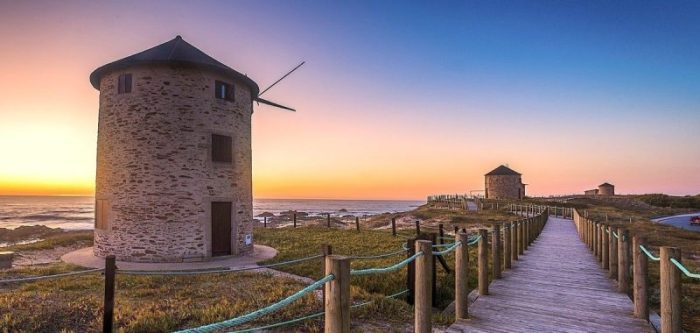
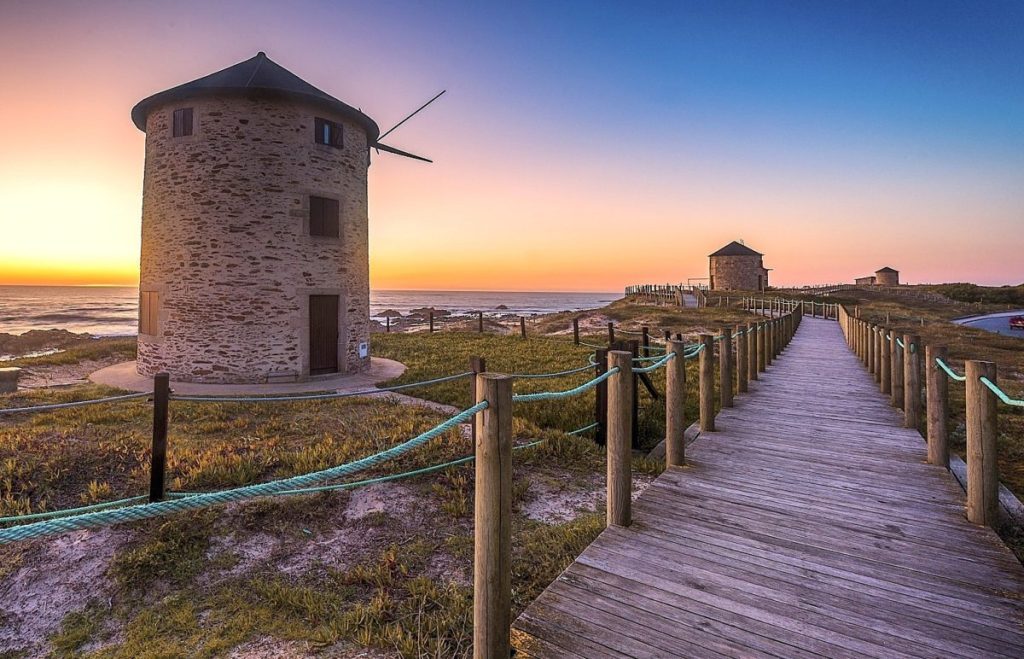
- Praia da Apúlia – Praia da Apúlia is especially known for the nearby little windmills called in Portuguese “moinhos”. Apúlia has been used since the Roman presence as a place of loading goods. Nowadays it is a popular beach destination, mainly among locals.
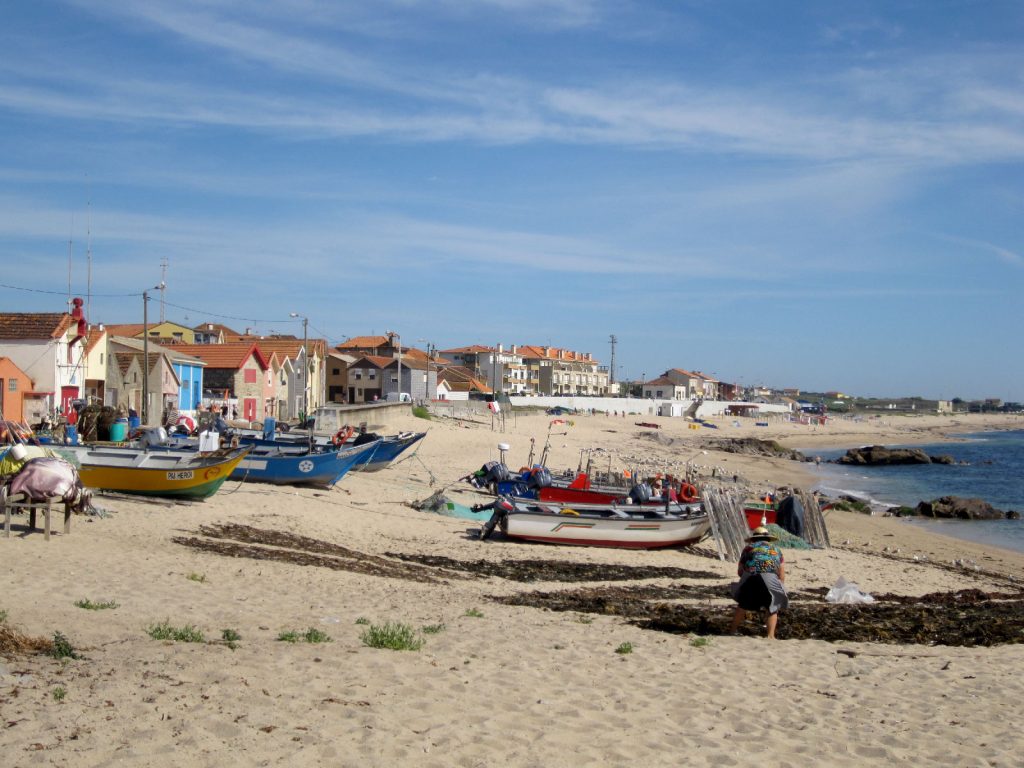
- Praia de Vila Chã – Praia de Vila Chã depicts Portuguese fishing tradition as it is situated in the heart of a fisherman village. You can see there many colorful fishing boats as well as other fishing tools. On the other side of the beach there are cute charming colorful traditional fisherman houses preserving the historic style.
- Praia Castro de São Paio – Praia Castro de São Paio is a small picturesque beach surrounded by rocks on one side and agricultural fields on the other. The main dominant of this beach is a little chapel built in 1885 (btw one year before the Luís I Bridge was opened). At the same time it is an archeological site and it is the only national example in which the sea touches the defenses.

- Praia da Madalena – Praia da Madalena has an immense stretch of sand and in its waters we can find rocky areas that meander through the waves. The wooden walkways that protect the dunes and the small stream that runs there are an invitation for long walks to enjoy the whole landscape of the beach.

- Praia de Miramar – Praia de Miramar is famous for its small chapel Senhor da Pedra built in 1763 located right on the beach offering a unique view. It is believed that the chapel may have its origin in an ancient pagan cult of a naturalistic nature having later been converted to Christianity.