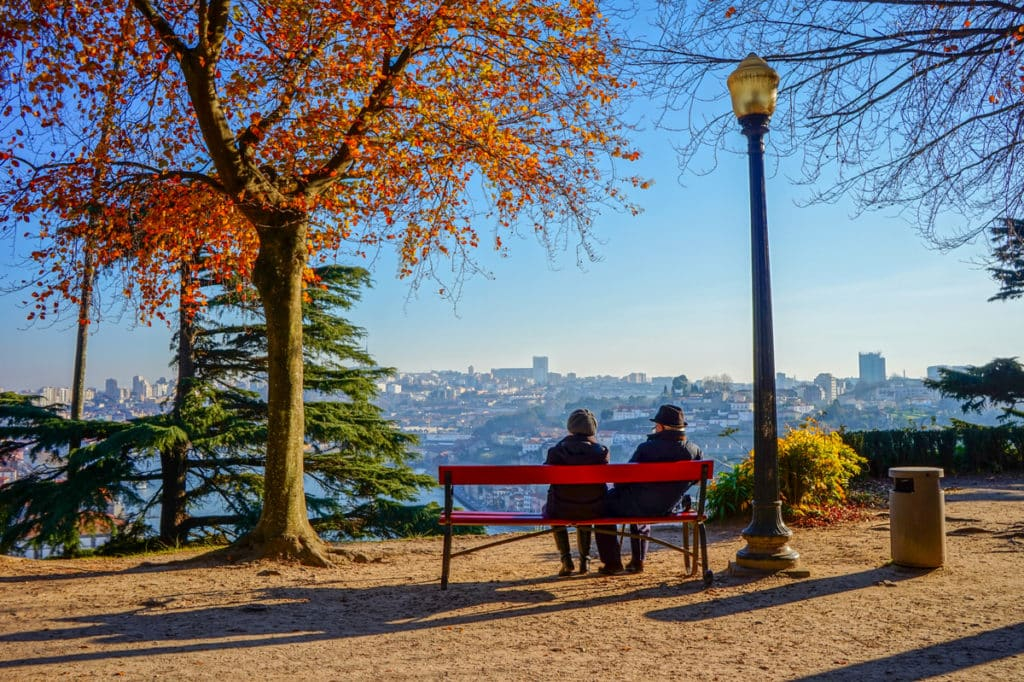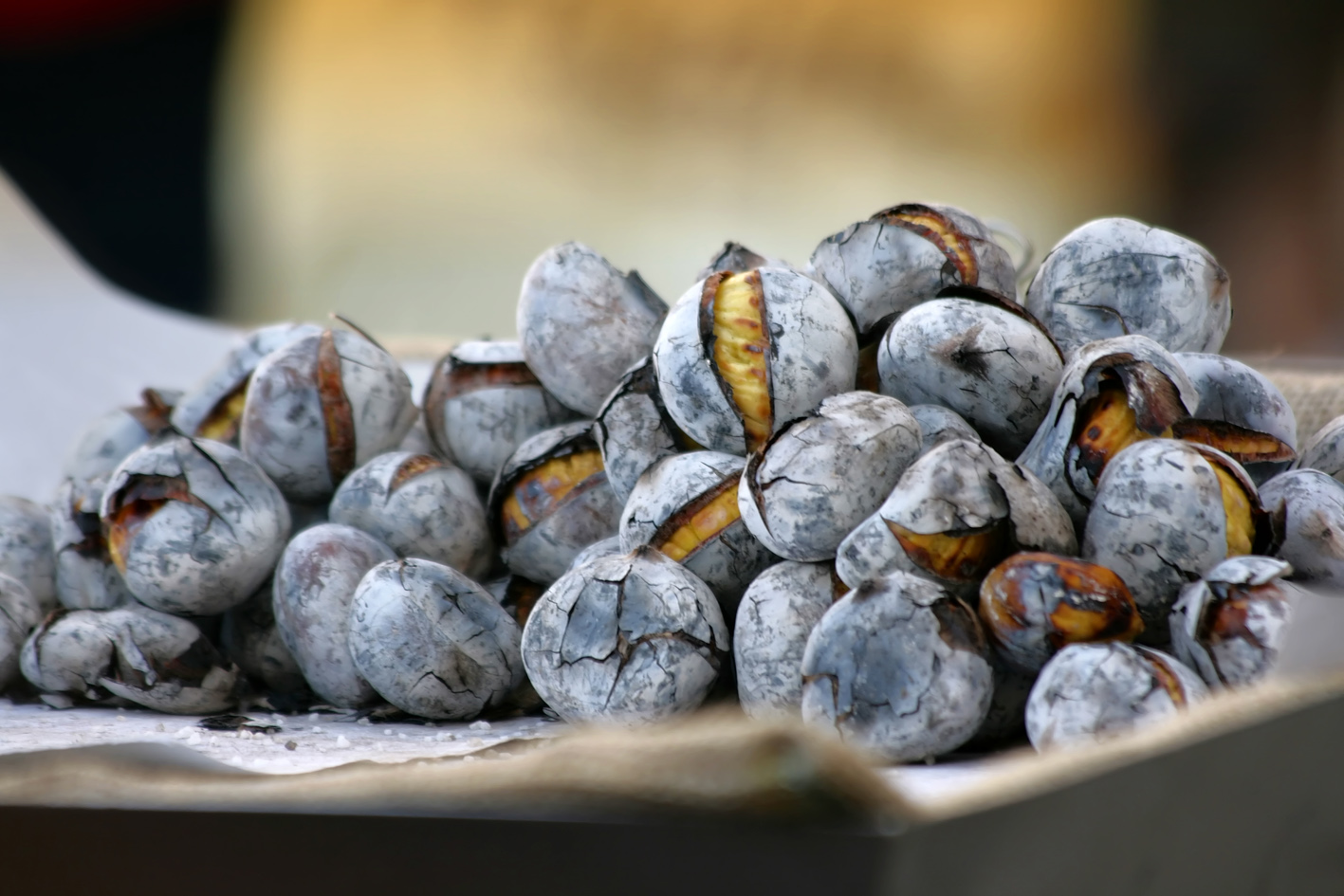
Portugal transforms in Autumn (outono). The beaches get quieter, the air smells of roasted chestnuts, and locals start pulling out their casacos (coats) and cachecóis (scarves). Outono in Portugal is a time of celebration, tradition, and comfort. Anita da Silva, Portuguese teacher and founder of Portuguese With Anita, shares her favorite autumn expressions, traditions, and cultural moments to help you experience this cozy season like a true local.

VOCABULARY FOR AUTUMN DAYS
Let’s start with some seasonal words you’ll hear often between September and November in Portugal:
- Folhas: leaves
- Outono: autumn
- Chuva: rain
- Céu nublado: cloudy sky
- Temporal: storm
- Castanhas: chestnuts
- Cachecol: scarf
- Impermeável: raincoat
- Lareira: fireplace
A common phrase you might hear in small talk: “Já se nota o outono, não é?” (“You can feel autumn arriving, can’t you?”). Or when the weather turns chilly: “Está um frio de rachar!” (literally, “a cold that cracks”). Learning seasonal words helps not only to practice vocabulary but also to understand how people live and communicate throughout the year. By knowing these couple of phrases, you’ll be able to join in the cozy, weather-filled conversations that mark Portuguese autumn life, and feel like a true local!
CELEBRATING SÃO MARTINHO
One of Portugal’s biggest autumn holidays is Dia de São Martinho (St. Martin’s Day), celebrated on November 11th.
This day commemorates the legend of Saint Martin of Tours, a Roman soldier known for his kindness. The story tells that, on a cold and rainy day, Martin met a poor man shivering from the cold. The soldier cut his military cloak in half and shared it with the man. Suddenly, the sky cleared and the sun came out; a summer miracle in autumn. Now, when a few warm, sunny days appear in early November, the locals call it: Verão de São Martinho (“St. Martin’s Summer”).
In Portugal, São Martinho marks not just the legend of generosity, but also an important time in the rural calendar. It’s when the new wine (vinho novo or água-pé) is ready to be tasted for the first time, the harvest season officially comes to an end, and the roasting of chestnuts begins. Around the country, you can hear the cheerful phrase: “No dia de São Martinho, vai à adega e prova o vinho! (“On St. Martin’s Day, go to the cellar and taste the wine!”).
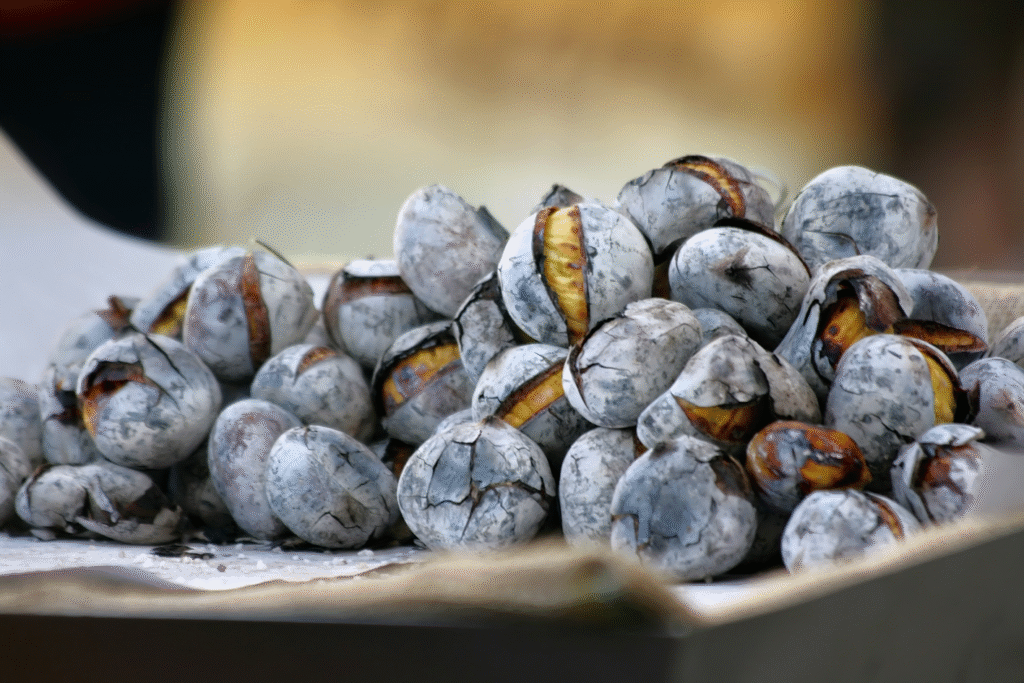
Locals gather for magustos, which are outdoor parties with bonfires, laughter, and plenty of castanhas assadas (roasted chestnuts). It’s a celebration of warmth, friendship, and abundance before winter arrives.
COMFORT FOODS AND CONVERSATION
As temperatures drop, Portuguese cuisine turns heartier. Autumn brings a range of food and dishes that warm the body and soul. The kitchen is filled with delicious smells, bringing families and friends together. You’ll see seasonal dishes like: Sopa de legumes, a vegetable soup; Cozido à portuguesa, a traditional stew with meats, sausages, and vegetables; and Batata-doce assada, a roasted sweet potato, which is usually sold in markets and fairs.
Outono is also the perfect season for cozy evenings by the lareira, chatting with friends and drinking chá (tea) or something stronger like ginginha (a cherry liqueur). On this occasion, you might hear phrases like, “Vamos aquecer-nos junto à lareira!”, which means “Let’s warm up by the fireplace!”

EMBRACE THE CALMNESS OF THE SEASON
Autumn in Portugal is quieter, slower, and deeply rooted in simple and humble pleasures: savoring good food, engaging in warm conversations, and basking in the beauty of nature. It’s the perfect time to slow down, learn new words, and connect with locals over shared traditions. So during this time, have your guarda-chuva (umbrella handy), delight yourself with some castanhas assadas, and wish everyone a Feliz São Martinho!