As an expat you certainly try to learn some Portuguese. But to get even closer to the native Portuguese, it is always nice to know also some slang words. In our next article, we will teach you 5 common slang Portuguese words starting with T.
- tuga – “tuga” is a slang expression for a Portuguese person and for a country Portugal. It originates in former African colonies being a derogatory term used by Africans during Portuguese colonial wars. Nowadays, the term “tuga” is used by Portuguese themselves, too.
- Example: PT: Ele é tuga. EN: He is Portuguese.

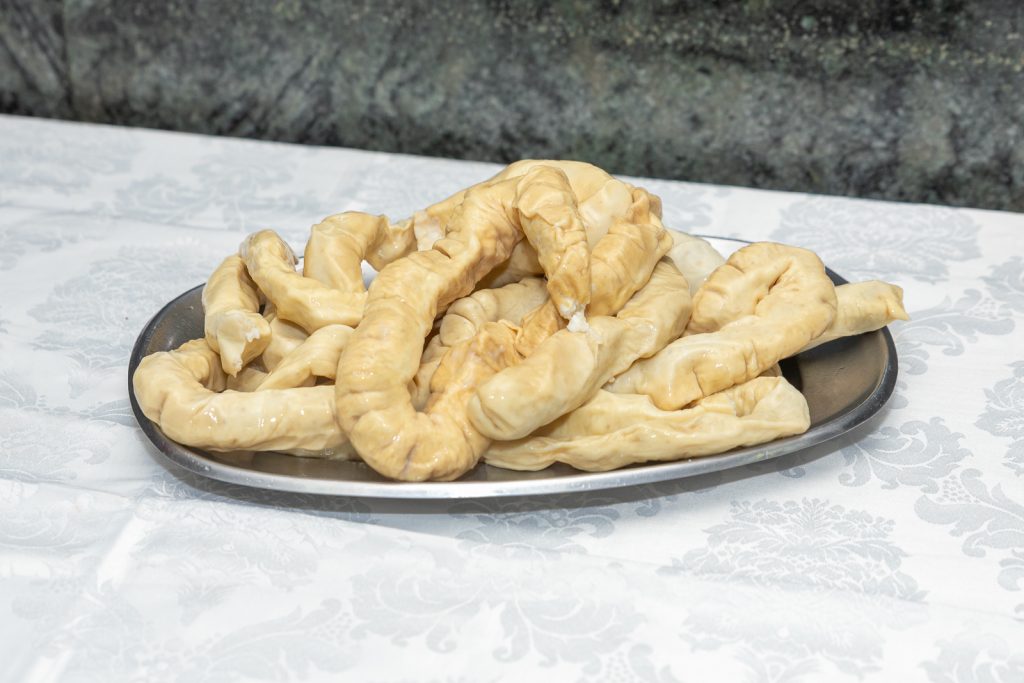
- tripeiro – “tripeiro” is a slang word referring to people from Porto (btw, officially Porto residents are called “Portuense”). There are several stories behind the name “tripeiro”. One of them says that in 1415 people from Porto gave away all the meat of the city to the army of Infante D. Henrique who sailed from Porto to conquer Ceuta in Africa. What was left to “Portuense” was tripe which is what people ate. Btw, the same story is also the origin of the typical Porto’s dish “Tripas à Moda do Porto”.
- Example: PT: Sou tripeiro. EN: I am “tripeiro”.
- tomates – “tomate” simply means a tomato. But be careful, because in slang it means testicles/balls. 😀 And Portuguese are proud of their tomatoes. 😀 You can use it also to say someone is brave and courageous – you have the balls.
- Example: PT: Tu tens tomates. EN: You have the balls.

- tipo – you will surely hear many times a word “tipo” when listening to the Portuguese conversation. It is used in the same context as the English slang word “like”. Recently, the word “tipo” is also used to refer to a dude, cool guy – “um tipo fixe”.
- Example: PT: Tipo ya, era isso que queria dizer-te. EN: Like yeah, that’s what i wanted to tell you.

- ‘tar – the word “estar” refers to “be” in a temporary meaning (for “permanent” meaning, there is another word for “be” – “ser”). But the differences between “estar” and “ser” are to be described in another article. 🙂 Let’s get back to the slang in which the word “‘tar” is simply the shortened version of “estar”. Portuguese use it really often in all conjugated forms.
- Example: PT: Tá tudo bem? EN: Is everything all right?