Whether you’re an EU citizen or arriving from outside the EU, setting yourself up as a freelancer (“trabalhador independente”) in Portugal involves a few key steps. Here’s a streamlined guide to get you sorted:
- Visa & Residency (for Non-EU Citizens) – If you’re from outside the EU/EEA/Switzerland, you’ll likely need a D7 Visa (for passive income or remote work) or a D8 (Digital Nomad) Visa, which is ideal for freelancers and remote workers.
- Basic steps:
- Apply for the visa at your local Portuguese consulate.
- After approval, you get a residence card (“título de residência”).
- Once in Portugal, apply for your residency permit with SEF/AIMA (Portuguese Immigration).
- Tip: Without a residence permit, you won’t be able to register for social security or start freelancing legally.
- Basic steps:
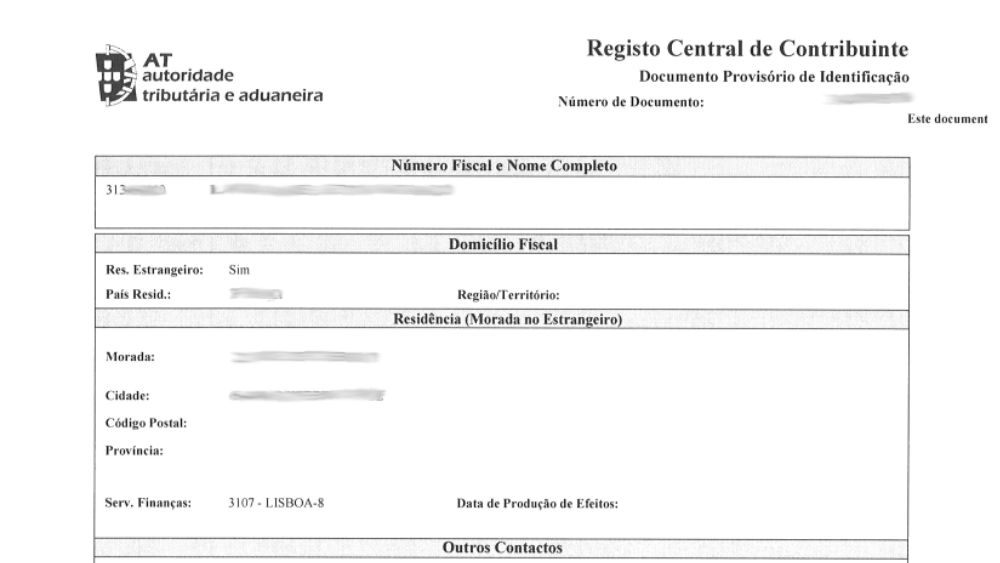
- Get a NIF (Número de Identificação Fiscal) – Your NIF is the Portuguese tax number – you’ll need it for everything, from renting an apartment to opening a bank account. Even when buying the things at the supermarket, you will be asked to say your NIF (or “contribuinte”) so the invoice appears in your personal finance and might be partially deducted (depending on the nature of purchase) from your personal income tax.
- How to get it:
- EU citizens can apply in person at a “Finanças” (tax office) with ID and proof of address.
- Non-EU citizens need a fiscal representative until they become residents.
- How to get it:
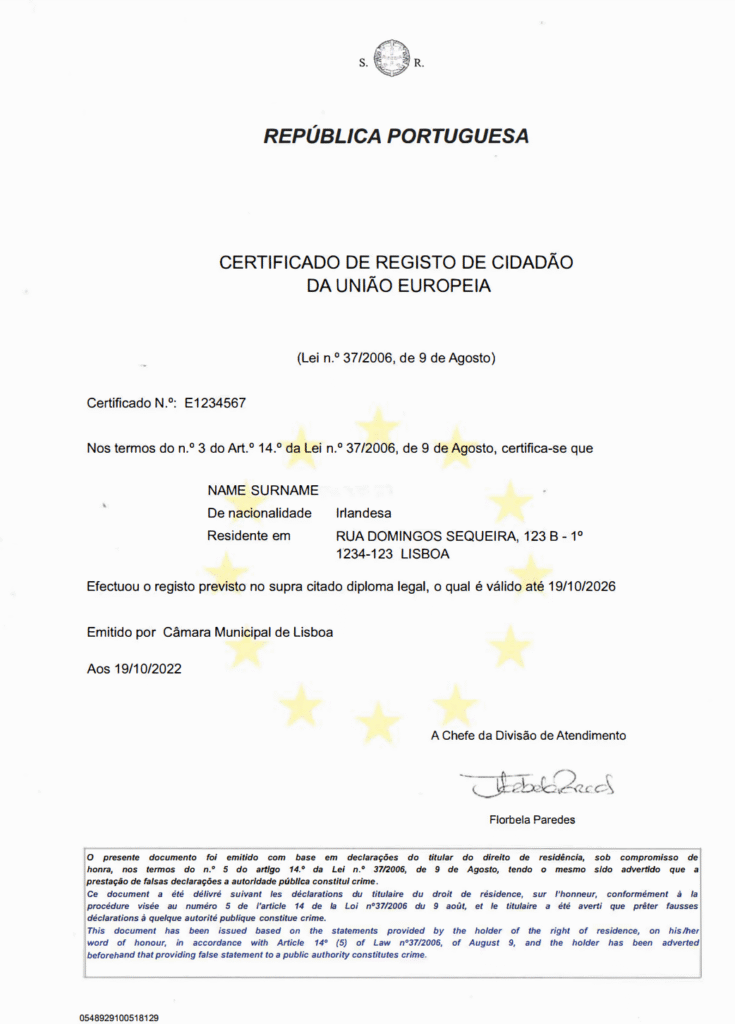
- Get CRUE for EU citizens – No visa needed, but you must still register your residence at your local city hall (“Câmara Municipal”) within 90 days of arrival to obtain CRUE (“Cartão de Residente da União Europeia”). For more information about CRUE and the documents you need to present check this article.
- Open a Portuguese Bank Account – This is often required to get a visa and also to handle tax & social security payments. Once you have a NIF, it’s straightforward to open an account in person.
- Popular banks: Millennium BCP, Novo Banco, ActivoBank, Revolut (PT version), N26 (not always accepted by authorities).
- Register as a Freelancer (“Atividade Aberta”) – Once you’re legally resident and have your NIF and bank account, you can register as self-employed:
- Go to:
- “Finanças” portal (online via Portal das Finanças) – or do it in person.
- You’ll choose:
- The type of activity (CAE code).
- Your accounting regime: usually Simplified Regime for new freelancers.
- Whether to opt for VAT (“IVA”) or not.
- The regime you’re under affects how you’re taxed and what you have to declare, so I recommend consulting the above with your advisor before opening the activity.
- Go to:
- Register with Social Security (“Segurança Social”) – This step is often automatic after registering as a freelancer, but you should check with your local “Segurança Social” office. You need a NISS (Social Security Number) – often generated during your registration, or request it directly if needed.
- Contributions start 12 months after registering (first 12 months you are exempted).
- The rate is currently 21.4% of your taxable income (taxable income is usually 70% of your income, depending on the type of activity). The contributions are calculated based on the income for previous quartal.
- It is possible to decrease the contributions by further 25% each.
- You are obliged to file after the end of each quartal so called “declaração social” stating your income in previous 3 months.
- Note that the month of registration for SS might affect the initial contributions. Also if you haven’t billed in previous quarter, you pay minimum contributions of € 20.

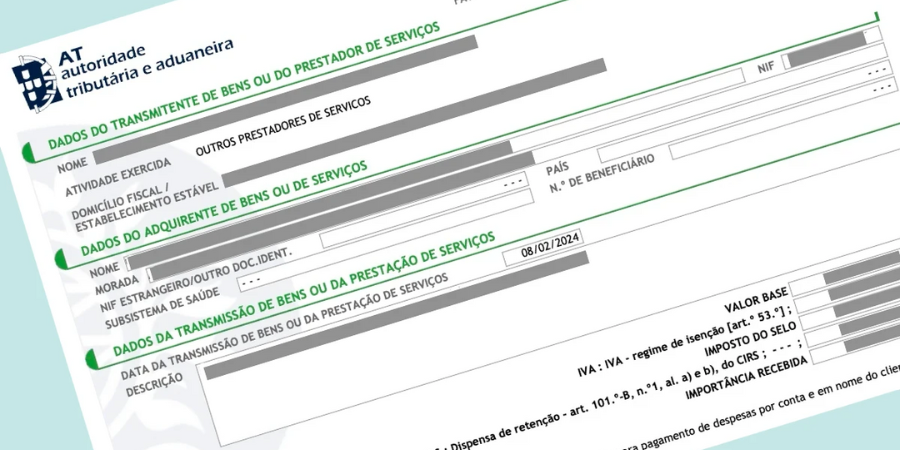
- Invoicing – Freelancers must issue “recibos verdes” (green receipts) for all income – these are digital invoices through the finance portal.
- Key obligations:
- Keep basic accounting records – or hire an accountant. Please note under simplified regime you do not need to make accounting.
- First-year freelancers may be exempt from some VAT obligations under the simplified regime.
- Key obligations:
- Taxes
- VAT
- Submit quarterly VAT returns (if registered for VAT – There are some thresholds for a mandatory VAT registration).
- Also bear in mind that if you only provide an intra-community services, no VAT in Portugal is applicable under reverse charge regime. However, even in such a case, you are obliged to report VAT declarations in finance portal (“declaração periodica” and “declaração recapitulativa“).
- PIT
- File an annual IRS tax return (between April and June).
- I recommend the help of an advisor even before coming to Portugal, as the right set-up might optimize your taxes. There are special regimes, such as NHR, or “Programa Regressar” regime, that might affect your overall tax position.
- VAT

- Optional but Recommended: Health Insurance & Accounting Help
- Health Insurance: While you’re covered under the national health system (SNS) once contributing to social security, many expats get private insurance for faster access.
- Accounting Help: Portugal’s tax system is complicated – an accountant / advisor is highly recommended, especially for VAT and IRS filings.